Prospectors Dream
 By quanpro85
·
Updated Tháng 10 13, 2026
·
11 min read
Gold Sluice Box Buying Guide: Sizes, Mat Types & How to Configure One (2026)
By quanpro85
·
Updated Tháng 10 13, 2026
·
11 min read
Affiliate disclosure:
ReviewDailyHub may earn a commission when you buy through links on this page. Products are selected and tested independently; commissions never influence our ratings.
|
If you’ve already compared our Best Gold Sluice Boxes picks by category and still aren’t sure which one is right for you, the missing piece is usually the sizing and mat-type language — “6X42,” “Vortex,” “Highbanker Hopper” — not the product names themselves.
This guide explains what those terms mean, how to size a box for your actual use case, and what else you may need to buy alongside it. For the full brand rundown, start with our Prospectors Dream Review.
|
|
Best Sellers
Prices verified live on the official store.
|
|
Trending Components
Add-ons prospectors are pairing with a base sluice or highbanker this month. Prices verified live on the official store.
|


|
On This Page
|
|
How to Read Sluice Box Sizes
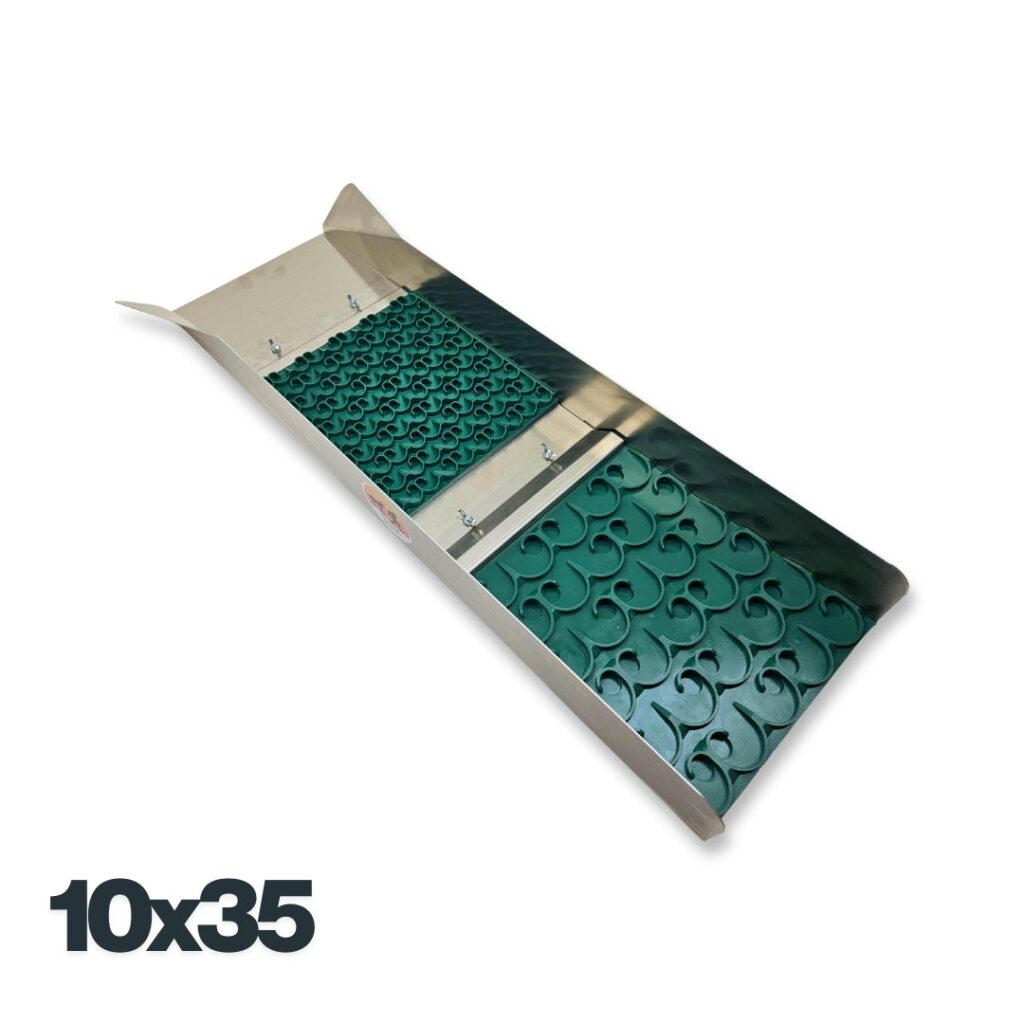
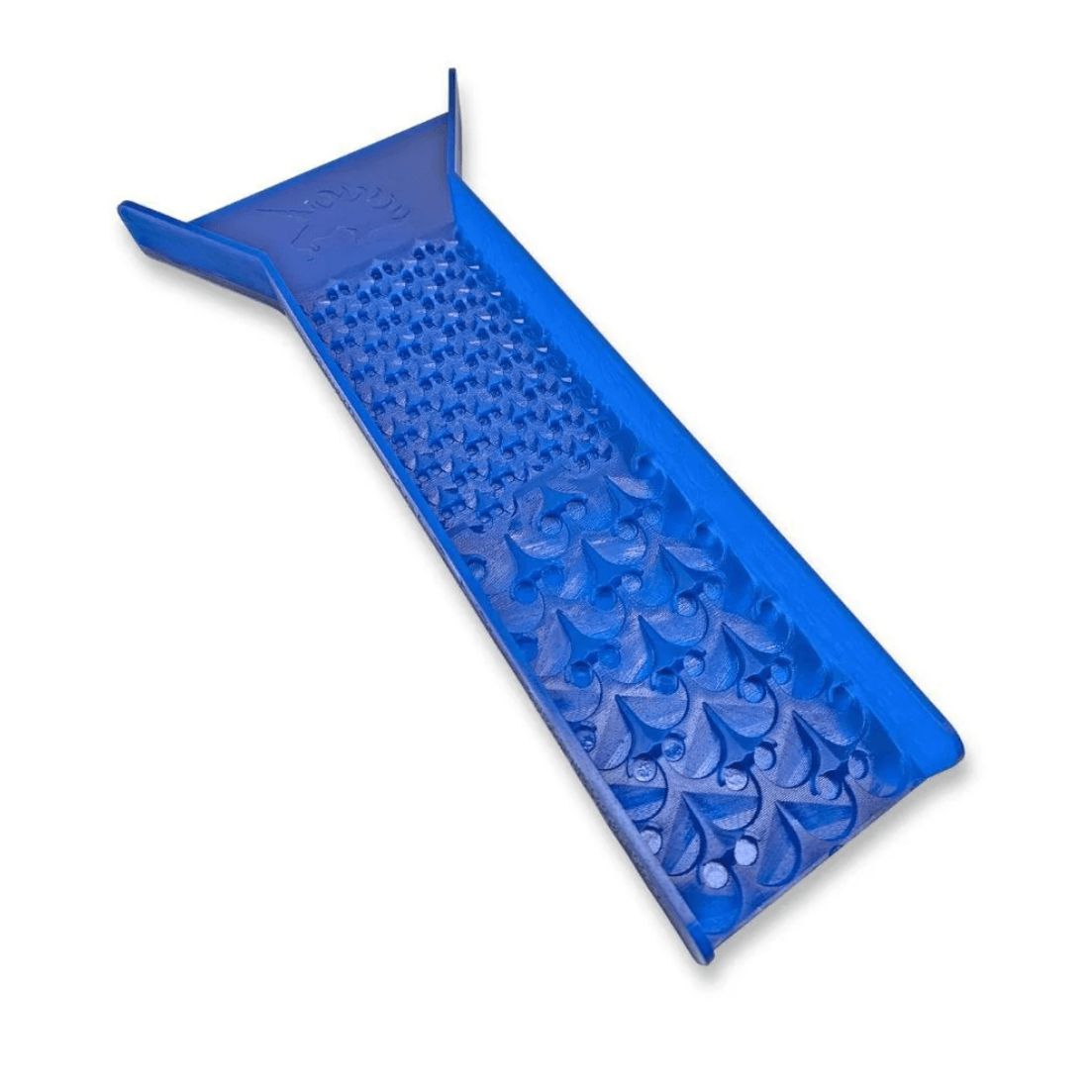
Prospectors Dream names most sluice boxes by their mat footprint, written as width x length — for example a “6X42” runs a 6" wide, 42" long mat, while a “4X16” runs 4" wide and 16" long. Reading that number tells you most of what you need to know before you even open the product page.
Width (the first number)
Width drives capacity and weight. 4" boxes are built for backpacking and one-handed setups; 6" and 8" is the most common mid-size range; 10" and 12" boxes are aimed at highbankers and higher-volume, fixed-site processing.
Length (the second number)
Length drives how much material the mat can process per pass and how much recovery zone the gold has to settle into. Longer boxes (36"–48") generally need more consistent water flow to run correctly than shorter 16"–24" boxes.
|
|
Dream Mat Types Explained
Shown here at a common 10"x24" size for a fair visual comparison — the same mat names are available across most box lengths. Descriptions and prices verified live on each product’s own page.
For a closer look at how these mats compare inside a specific box, see our Dream Mat Review, or our Best Dream Mat for Fine Gold guide if fine-gold recovery specifically is your priority.
|


|
Sluice vs. Highbanker: Which Do You Need
A standard sluice box relies on gravity and stream current — you set it in moving water and feed material by hand. It’s the simplest, lightest and cheapest way to start, and it’s what most of the compact 4"–6" boxes in the lineup are built for.
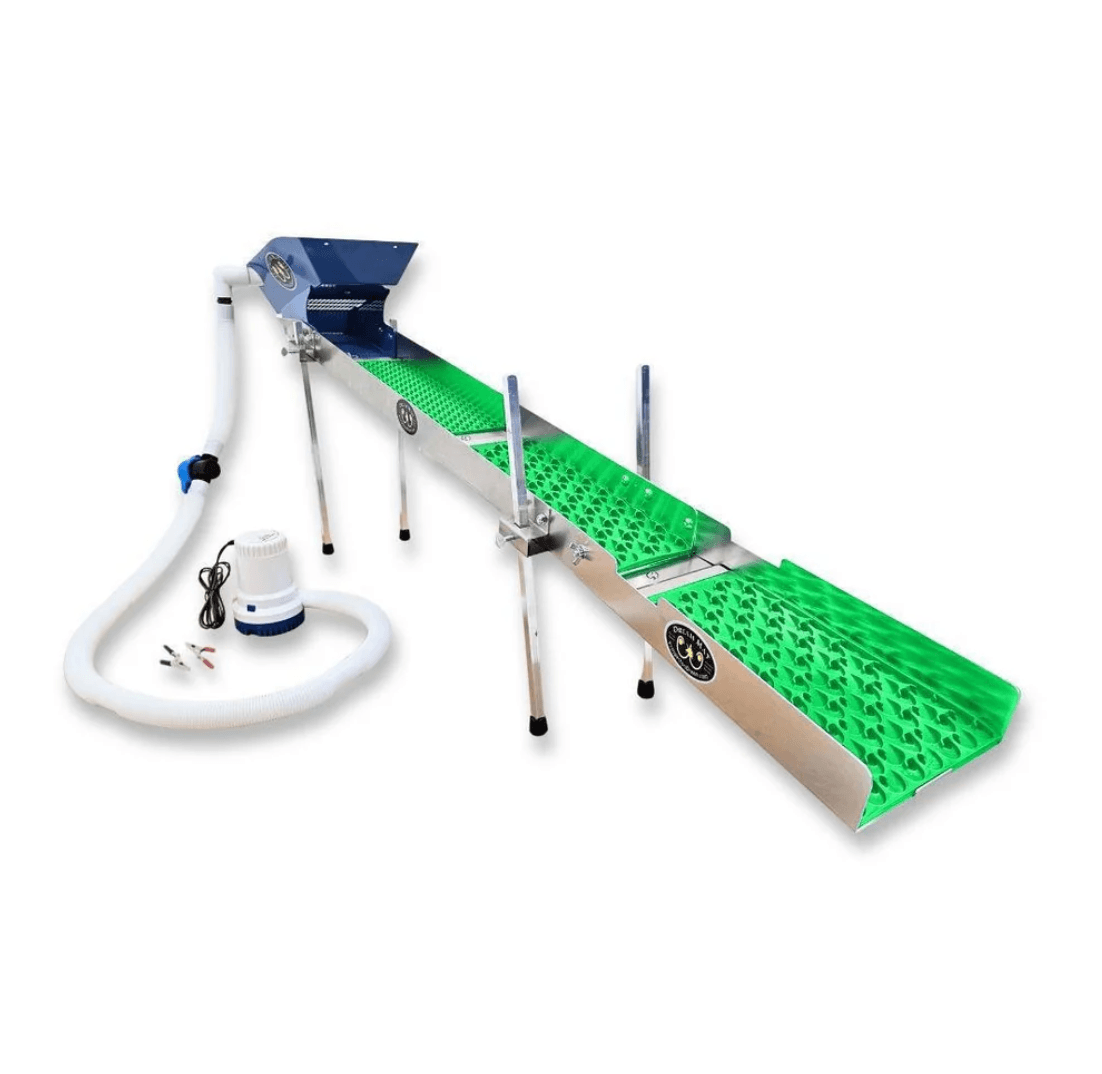
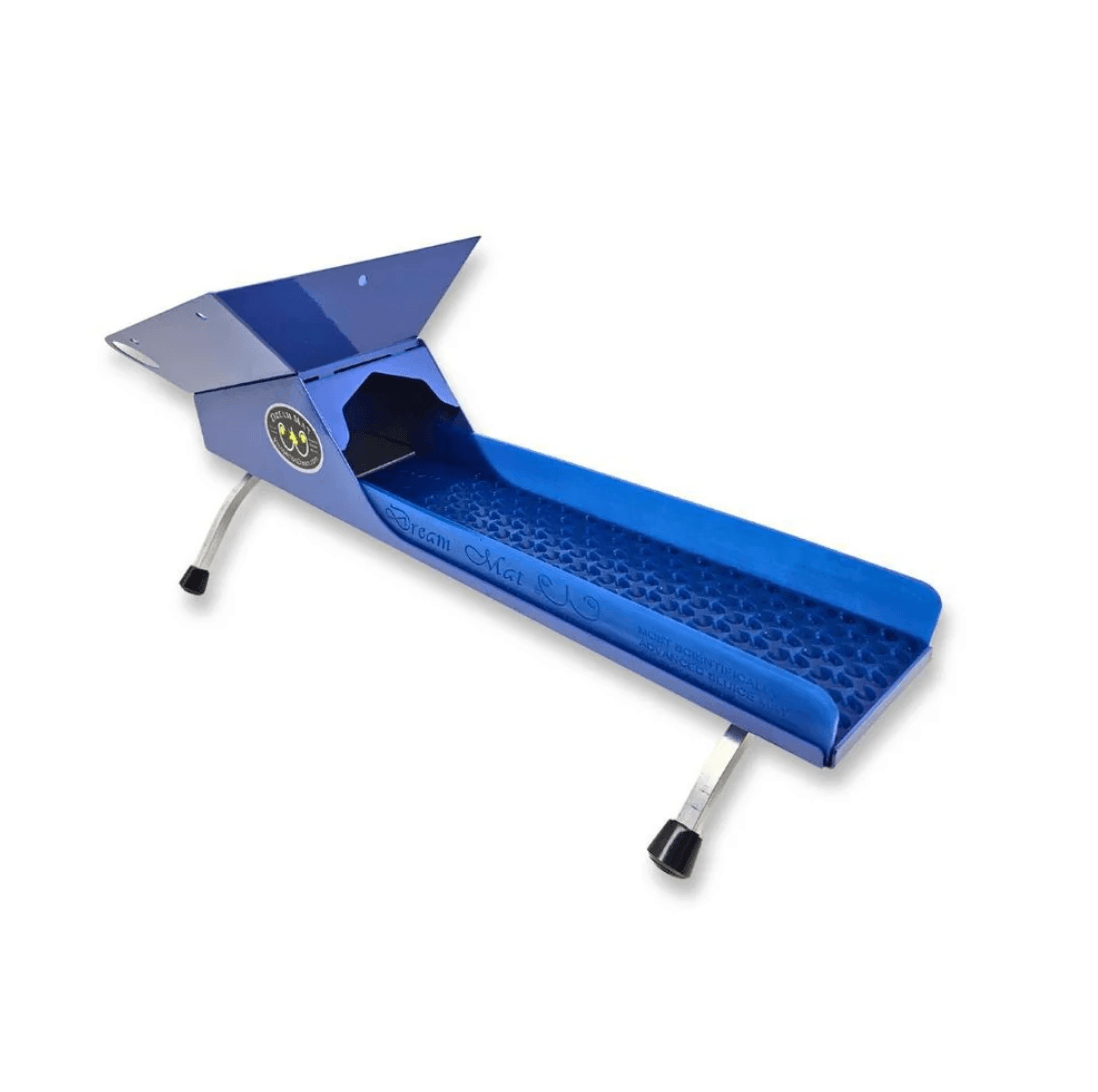
A highbanker adds a hopper and a water pump on top of the same mat technology, so you can process material away from the water’s edge — on a bench, a bank, or dry ground near a creek. That flexibility costs more (highbanker hoppers alone run from $342.00, and full highbanker kits typically start well above a comparable bare sluice) and adds setup steps: positioning the pump, running hose, and priming the water feed before you can process anything.
If you already have consistent access to flowing water at your prospecting site, a standard sluice is usually the more practical starting point. If your best ground is away from the water, or you want to work a fixed site over multiple visits, a highbanker earns its extra cost. See our 6X42 Highbanker Hopper review for a closer look at one specific highbanker combo kit in practice.
|
|
Size & Configuration Comparison
For ranked picks within these categories rather than a size-by-size breakdown, see our Best Gold Sluice Boxes picks by category guide.
|
|
Building Out a Complete Setup
Several listings on the site are the sluice or highbanker body only — legs, hoppers and pumps are frequently sold as separate add-ons rather than bundled in. Before you check out, confirm you have:
1. The body itself — the sluice or highbanker sluice box in your chosen size, with a mat already included.
2. A leg kit, if you’re highbanking or running on uneven ground — standard 18" leg kits run about $82.00, with a wider 22" stance option at $129.00 for extra stability.
3. A hopper, if you’re converting a sluice into a highbanker setup — hopper sizing (6" through 12") should match your sluice body’s width.
4. A pump, for any highbanker running away from natural stream flow — some kits list pump-included and no-pump variants side by side at different prices, so double-check which one you’re ordering.
|
|
Budget Tiers
|
|
Sluicing vs. Panning vs. Dredging
Panning is the slowest but cheapest and most portable method — no equipment beyond a pan, and it works anywhere there’s material and a little water. It doesn’t scale: you’re processing one pan at a time.
A sluice box sits in the middle — still portable in the smaller sizes, but it lets water do the separating continuously while you keep feeding material, so you process far more volume per hour than panning alone.
Dredging (suction dredges, or dredge-specific mats like the Dredge Dream Mat above) is built for processing large, heavy volumes of material, often underwater or from a stream bed directly, and generally requires more equipment, setup and, depending on your location, regulatory awareness than sluicing. Most prospectors starting out are better served by a sluice box, and can move to dredge-specific equipment later if their site and goals call for it.
|
|
Buying Mistakes to Avoid
Sizing for your dream setup, not your actual trips
A 10" or 12" box processes more material, but only if you can transport it and have the water flow to run it properly. Buy for the trips you’ll actually take, not the biggest number available.
Ordering a highbanker body without checking for included legs, hopper or pump
Many highbanker listings separate the sluice body from the leg kit, hopper and pump. Read the variant options carefully so you’re not stuck mid-trip with a body and no way to run it.
Assuming mat names are ranked best-to-worst
Combo, Vortex, Mini, Micro and Dredge aren’t a quality ladder — they’re built for different roles (finishing vs. primary catch vs. heavy-material processing). Match the mat type to how you’ll actually use the box, not to whichever name sounds most advanced.
Forgetting that prices and configurations rotate
Variant pricing on bundle-style kits (like the Transformer) changes as configurations are added or dropped. Always confirm the current price and included components on the product page itself before ordering.
|
|
Gold Sluice Box Buying Guide FAQ
What does a size like "6X42" mean on a Prospectors Dream sluice box?
It’s the mat footprint in inches, width x length — a 6X42 runs a 6" wide, 42" long mat. Width affects capacity and weight; length affects how much material the mat processes per pass.
What’s the difference between a Vortex mat and a Combo mat?
Vortex is the original, best-selling single-cell mat design used as the default matting across most kits. Combo mats run two distinct cell profiles in one continuous mat for higher-capacity, two-stage recovery — typically featured on larger highbanker and custom-sluice setups.
Do I need a highbanker or is a standard sluice enough?
A standard sluice works if you have consistent access to flowing water at your site. A highbanker adds a hopper and pump so you can process material away from the water’s edge — useful for benches, banks and dry ground, at a higher cost and with more setup.
Are legs, hoppers and pumps included with a sluice box or highbanker?
It varies by listing. Several highbanker kits sell the body separately from leg kits, hoppers and pumps, or offer pump-included and no-pump variants side by side. Always check the specific variant before ordering.
What’s the cheapest way to get started?
The 4X16 Adventure Sluice, verified live at $36.99, is a complete ready-to-run backpack sluice and the lowest-cost full setup in the current lineup.
Is a Micro mat worse than a Vortex or Combo mat?
Not necessarily worse — different role. Micro mats are tuned as finishing/beach mats that catch gold right at the front row, which makes them a common choice for the last stage of a multi-mat setup rather than a standalone primary mat.
Can I upgrade a sluice into a highbanker later instead of buying both separately?
In several cases yes — hoppers, leg kits and pumps are sold as standalone add-ons sized to fit an existing sluice body, and the Transformer line is specifically built around modular reconfiguration.
Which method should a beginner start with: sluicing, panning or dredging?
Sluicing is the practical middle ground for most beginners — more throughput than panning without the equipment, setup and regulatory considerations that come with dredging.
|
|
Ready to Build Your Setup?
Compare current Prospectors Dream sizes and add-ons, and use the featured coupon when eligible.
|
Related: Gold Cleanup Equipment Guide
Related reviews
Affiliate disclosure:
ReviewDailyHub may earn a commission when you buy through links on this page. Products are selected and tested independently; commissions never influence our ratings.